 Image 1 of 1
Related Standards:
MLS: 1.R.2.A.f 2.R.2.A.f 3.R.2.A.g 4.R.2.A.e R.2.A.c
CCSS: RL.2.6 RL.3.6 RL.4.6 RL.5.6
Format: PDF
Pages: 1
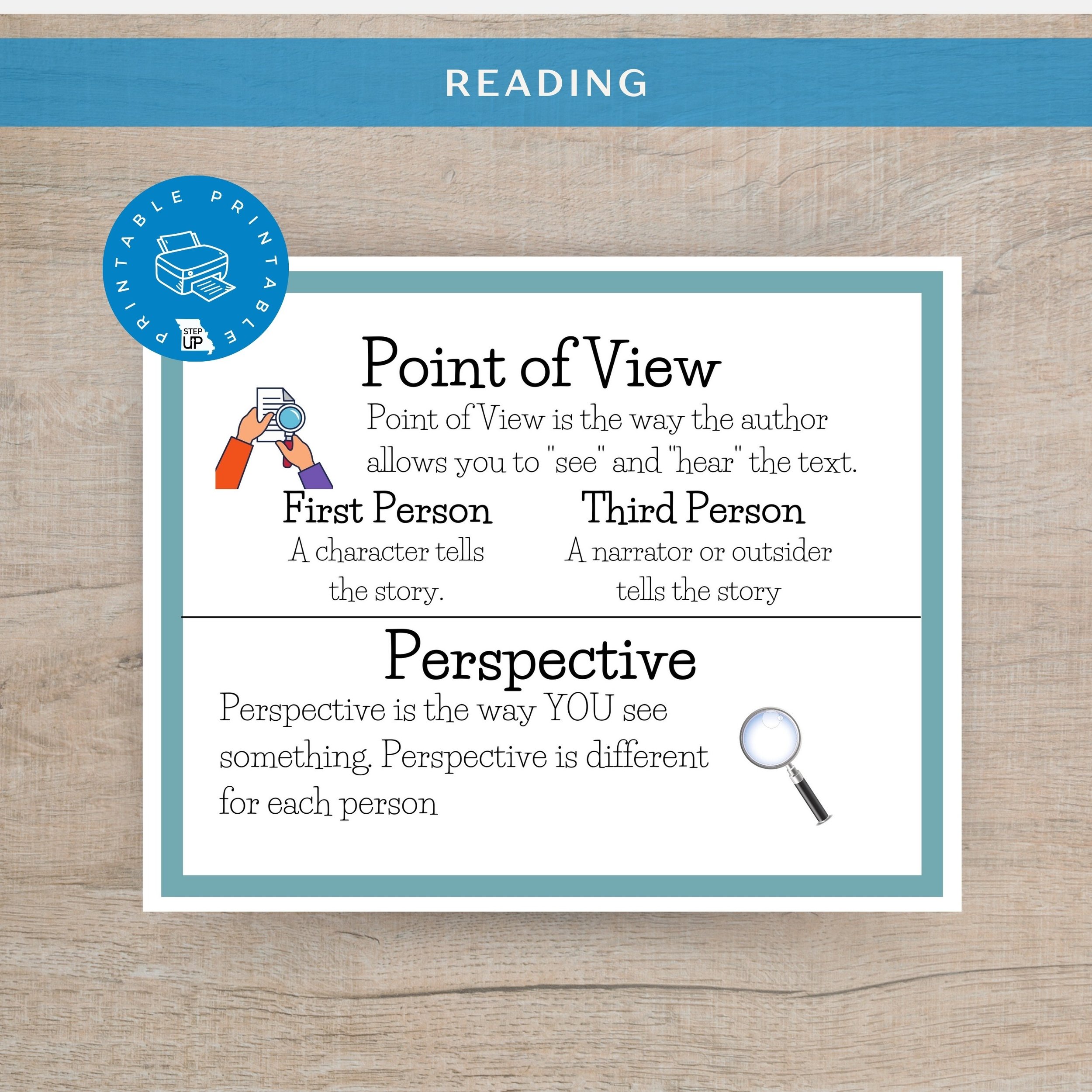
Help your students master one of the most challenging concepts in literacy analysis with this clear and concise educational graphic. This visual tool is specifically designed to help students distinguish between Point of View (POV) and Perspective, ensuring they can accurately analyze any text.
The Key Differences Explained:
This graphic breaks down these foundational reading comprehension concepts into easy-to-understand definitions:
Point of View (POV): Focuses on who is telling the story (the narrator's voice). This includes identifying first-person, second-person, or third-person narration.
Perspective: Focuses on how a character sees or feels about the events in the story. It involves their unique background, experiences, and biases.
Why This Resource Works for Your Classroom:
Clarifies Vocabulary: Addresses common misconceptions in narrative writing and literature study.
Visual Learning: Uses a structured layout that works perfectly as a classroom anchor chart or a digital reference for distance learning.
Critical Thinking: Encourages students to look beyond the "narrator" and dive into character analysis and empathy.
Standards-Aligned: Supports Common Core ELA standards for analyzing a particular point of view or perspective in a text.
Whether you are teaching middle school ELA or upper elementary reading, this Point of View vs. Perspective visual aid is an essential addition to your teaching toolkit!
Once purchased, you will be directed to an immediate download.
Format: PDF
Pages: 1
Help your students master one of the most challenging concepts in literacy analysis with this clear and concise educational graphic. This visual tool is specifically designed to help students distinguish between Point of View (POV) and Perspective, ensuring they can accurately analyze any text.
The Key Differences Explained:
This graphic breaks down these foundational reading comprehension concepts into easy-to-understand definitions:
Point of View (POV): Focuses on who is telling the story (the narrator's voice). This includes identifying first-person, second-person, or third-person narration.
Perspective: Focuses on how a character sees or feels about the events in the story. It involves their unique background, experiences, and biases.
Why This Resource Works for Your Classroom:
Clarifies Vocabulary: Addresses common misconceptions in narrative writing and literature study.
Visual Learning: Uses a structured layout that works perfectly as a classroom anchor chart or a digital reference for distance learning.
Critical Thinking: Encourages students to look beyond the "narrator" and dive into character analysis and empathy.
Standards-Aligned: Supports Common Core ELA standards for analyzing a particular point of view or perspective in a text.
Whether you are teaching middle school ELA or upper elementary reading, this Point of View vs. Perspective visual aid is an essential addition to your teaching toolkit!
Once purchased, you will be directed to an immediate download.
MLS: 1.R.2.A.f 2.R.2.A.f 3.R.2.A.g 4.R.2.A.e R.2.A.c
CCSS: RL.2.6 RL.3.6 RL.4.6 RL.5.6