 Image 1 of 1
Related Standards
MLS: LS1.C.1
CCSS/NGSS: K-LS1-1
Format: PDF
Pages: 1
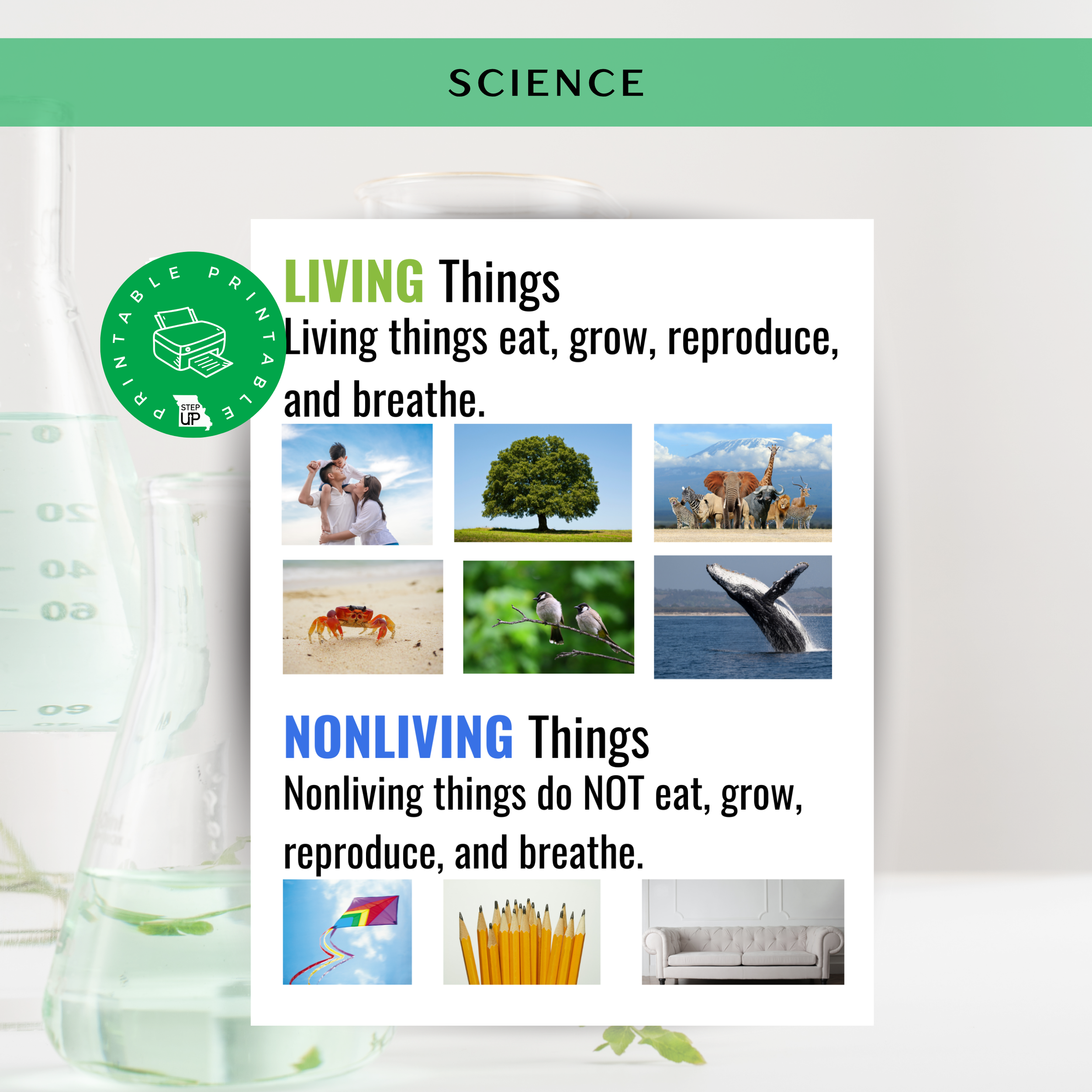
This engaging and educational graphic is the perfect resource for introducing students to the fundamental concepts of biology and life science. By clearly illustrating the differences between living and non-living things, this visual tool helps learners categorize the natural world with ease.
Master the Characteristics of Life
With vibrant illustrations and student-friendly explanations, this graphic highlights the seven characteristics of living things, including:
Growth and Development: How organisms change over time.
Reproduction: The ability to produce offspring.
Energy Needs: Understanding metabolism and nutrition.
Response to Stimuli: How living things interact with their environment.
In contrast, the graphic clearly defines non-living things, explaining why they do not exhibit these biological traits, making the distinction clear for early learners.
Why Educators Love This Science Resource:
Visual Learning Aid: Simplifies complex basic biology concepts into a digestible, fun format.
Curriculum Aligned: Supports NGSS (Next Generation Science Standards) for elementary life science and the "Structure and Processes" units.
Versatile Use: An excellent anchor chart for classroom walls, a reference for homeschooling, or a digital supplement for science slides.
Accessible for All Ages: Designed specifically for K-5 students to make science concepts fun and accessible.
Enhance your science curriculum today with this high-quality living and non-living things anchor chart!
Once purchased, you will be directed to an immediate download.
Format: PDF
Pages: 1
This engaging and educational graphic is the perfect resource for introducing students to the fundamental concepts of biology and life science. By clearly illustrating the differences between living and non-living things, this visual tool helps learners categorize the natural world with ease.
Master the Characteristics of Life
With vibrant illustrations and student-friendly explanations, this graphic highlights the seven characteristics of living things, including:
Growth and Development: How organisms change over time.
Reproduction: The ability to produce offspring.
Energy Needs: Understanding metabolism and nutrition.
Response to Stimuli: How living things interact with their environment.
In contrast, the graphic clearly defines non-living things, explaining why they do not exhibit these biological traits, making the distinction clear for early learners.
Why Educators Love This Science Resource:
Visual Learning Aid: Simplifies complex basic biology concepts into a digestible, fun format.
Curriculum Aligned: Supports NGSS (Next Generation Science Standards) for elementary life science and the "Structure and Processes" units.
Versatile Use: An excellent anchor chart for classroom walls, a reference for homeschooling, or a digital supplement for science slides.
Accessible for All Ages: Designed specifically for K-5 students to make science concepts fun and accessible.
Enhance your science curriculum today with this high-quality living and non-living things anchor chart!
Once purchased, you will be directed to an immediate download.
MLS: LS1.C.1
CCSS/NGSS: K-LS1-1